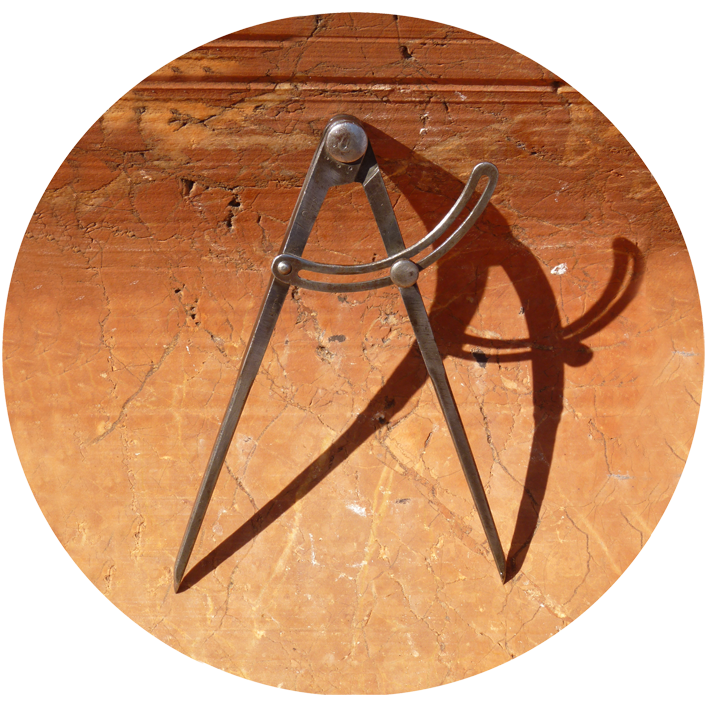
Freemasonry cannot be defined exhaustively; its fundamental consensus must be interpreted and lived in ways that remain relevant and socially engaged at different times and in different places. One may describe this fundamental consensus as the striving for human maturity and for tolerance. Freemasonry is not practised merely by contemplating the past, nor is it exhausted in ritual, and it is incompatible with retreating into an ivory tower: it is a continuous search for new tasks and inseparably linked with the endeavour to find answers — for only that which moves is alive.
“The full range of interpretive possibilities within this fundamental consensus unites the individual, highly differentiated links of the Masonic chain. Masonic work is carried out in the lodges, which, as small groups and communities of dialogue, engage with the issues of their time. Within the framework of this consensus, the lodges are autonomous. As a rule, only the individual or the creative small group can act outwardly in a Masonic spirit.
The lodge, as a place of unreserved intellectual engagement and emotional sincerity, offers the opportunity to test ideas both theoretically and practically, and it supports the individual in his or her work.
Constructive criticism and self‑criticism form the foundation of all Masonic work; they encompass every aspect of our perceptible inner and outer world — including the individual Freemason. Only in this way can we free ourselves from internal and external constraints. In any case, only those should be admitted to the lodge who are capable and willing to participate in dialogue, to question their own thinking and actions, and to recognise and overcome prejudices as such.
Life within the lodges is shaped by their members. There is only delegation from the bottom upward, and therefore responsibility from the top downward. The principles of Freemasonry should not be a restrictive framework but a solid foundation for all possible developments. Responsibility exists only toward human beings, not toward institutions. Know yourself – Master yourself – Refine yourself! Freemasonry must always begin with work on oneself, with the aim of exploring:
”What must one be in order to be human?”
.·.